2018
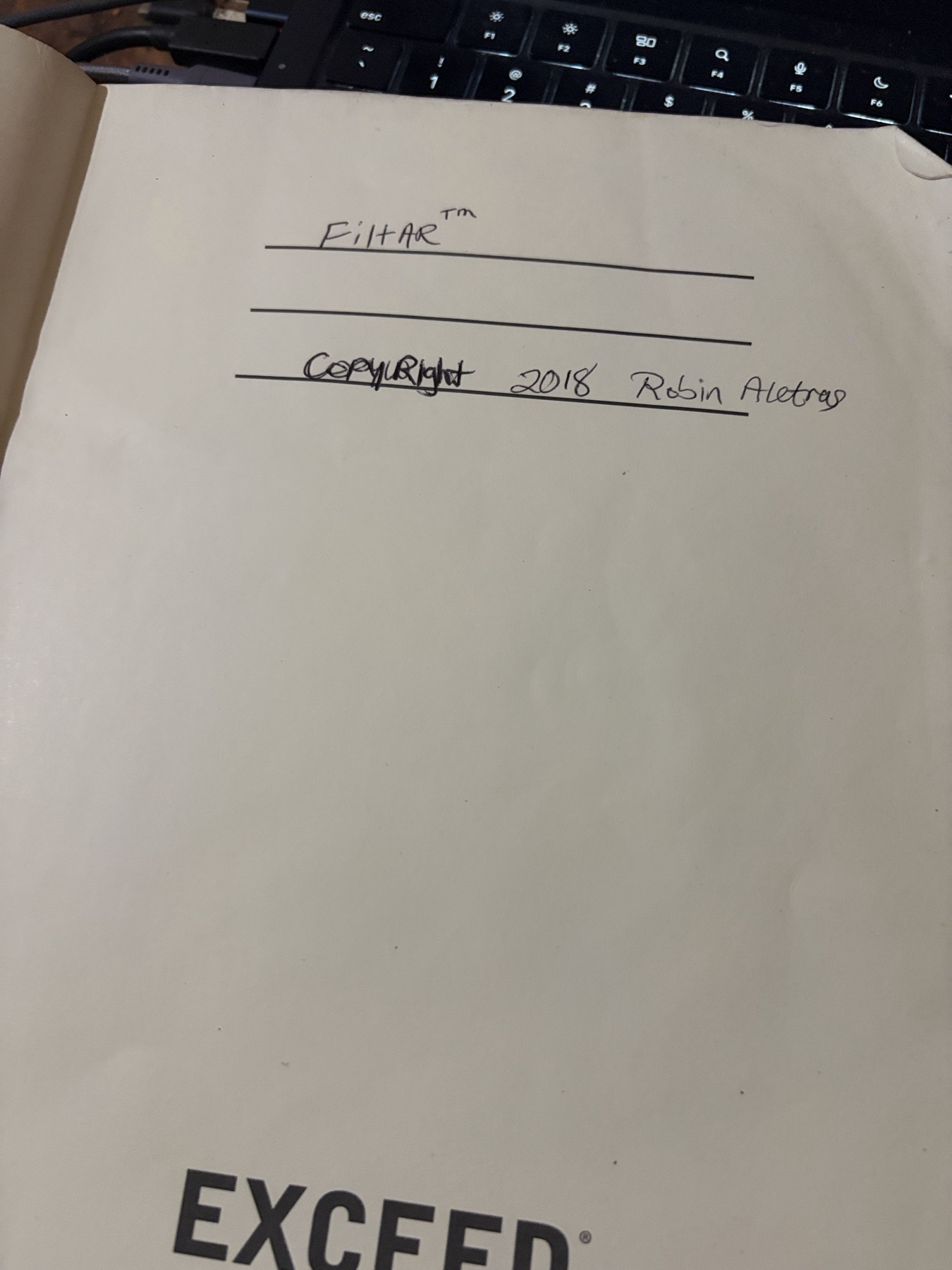
The notebook closesA complete plan. No parts on the shelf.
No product, no funding — and no way to build it yet. GPS missed by meters, Bluetooth couldn't range, language models couldn't talk, and nobody sold a token-run radio network. I wrote the plan anyway, stamped it with a copyright, and put it in a drawer.
2018
May 2018 · Google ships Cloud AnchorsThe industry anchors AR with cameras.
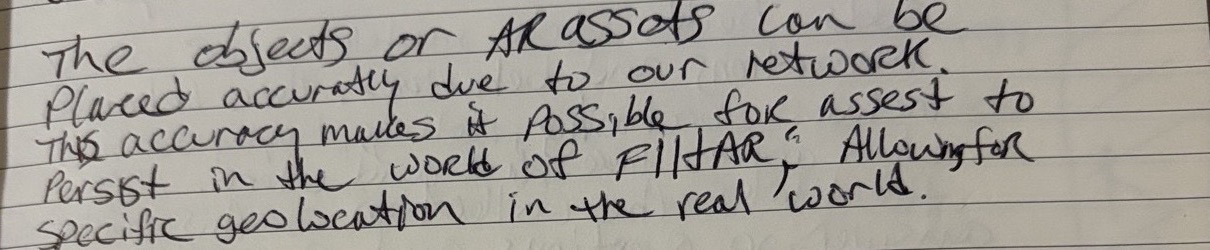
Prescanned point clouds, camera streams to servers — it needs light, needs texture, needs someone to have scanned the place first. My plan took the other road: a radio network whose accuracy makes assets persist.
2019
January 2019 · Bluetooth 5.1Radios learn to measure angles.
The spec adds Direction Finding: a receiver can finally tell where a signal comes from. The positioning mesh I drew stops being impossible — the physics starts moving toward the page.
2019
February 2019 · Amazon acquires eeroAmazon buys the box I circled.
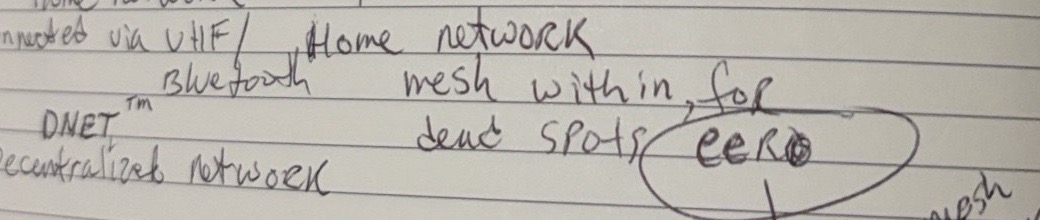
I never planned to build every part myself. For the dead spots in DNET I picked a part off the shelf — eero, circled in ink. A year later Amazon bought the company and made it the backbone of its home-network play. Right part, right shelf.
2019
July 2019 · Helium mainnet launchesThe people-powered network proves out.
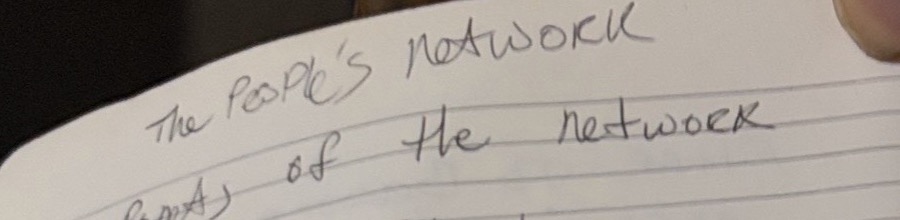
The plan needed a radio network grown by the people who host it, paid in tokens — that's what my FAR Cloud pages describe. In July 2019, Helium's mainnet took that same model live at scale. I wasn't the only one betting on it — and the bet was right.
2019
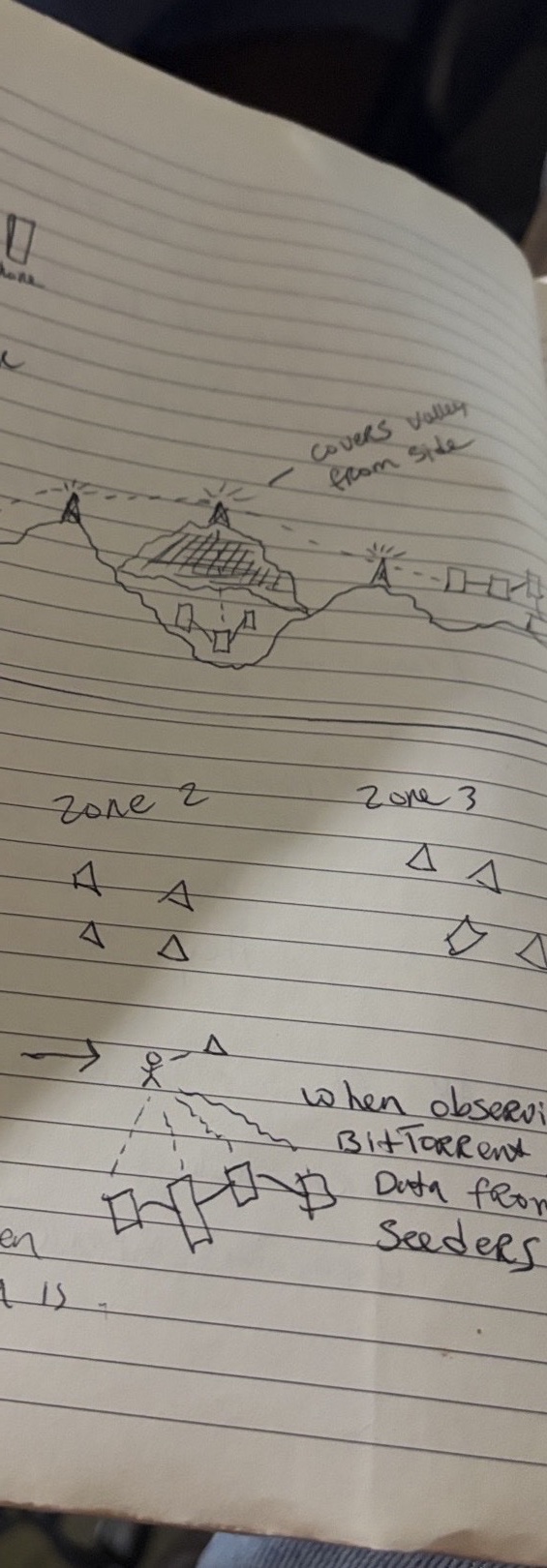
2019 / 2021 · Peer-assisted delivery consolidatesAR assets travel like torrents.
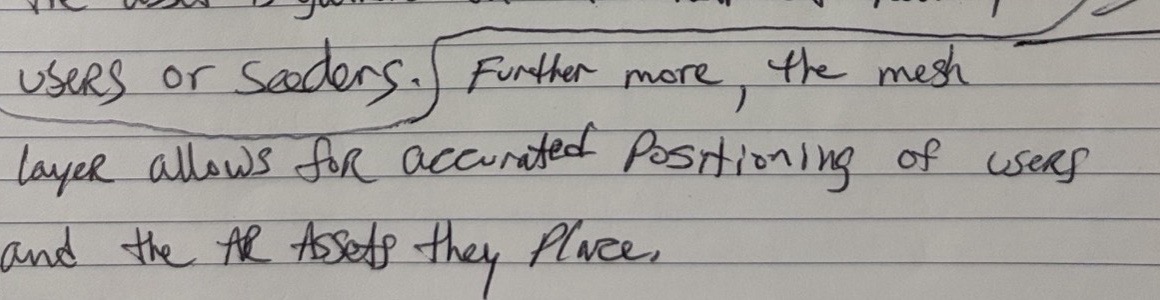
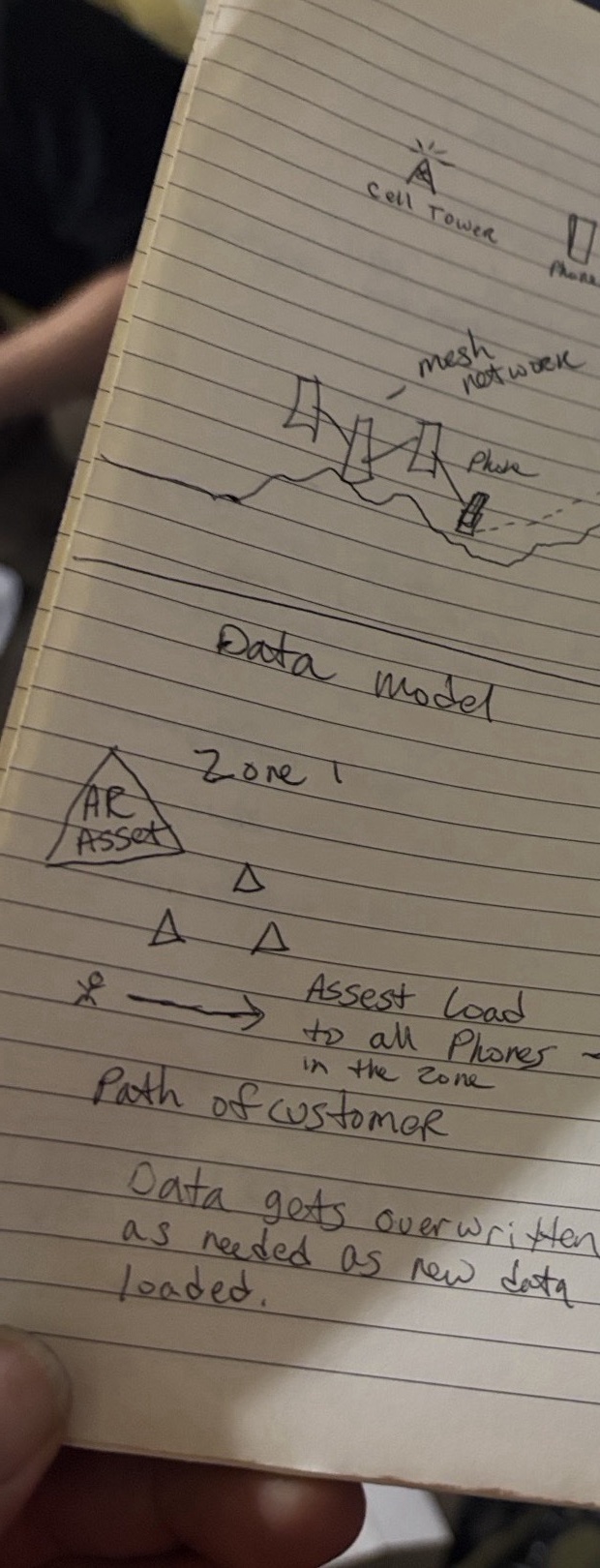
My data-model pages: assets preload to every phone in a zone along the path of the customer, old data overwritten as new data loads, observers pulling BitTorrent data from seeders. Peer-assisted delivery became an industry — Streamroot acquired in 2019, Peer5 by Microsoft in 2021.
2020
June 2020 · GPT-3Conversation becomes an interface.
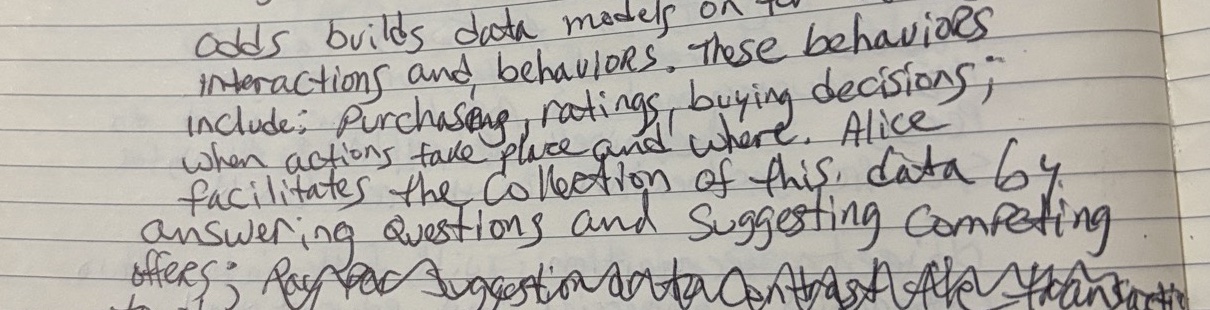
Language models make talking to software the way in. I had already designed ALICE that way: she learns by "answering questions and suggesting competing offers." The conversation was always the front door.
2021
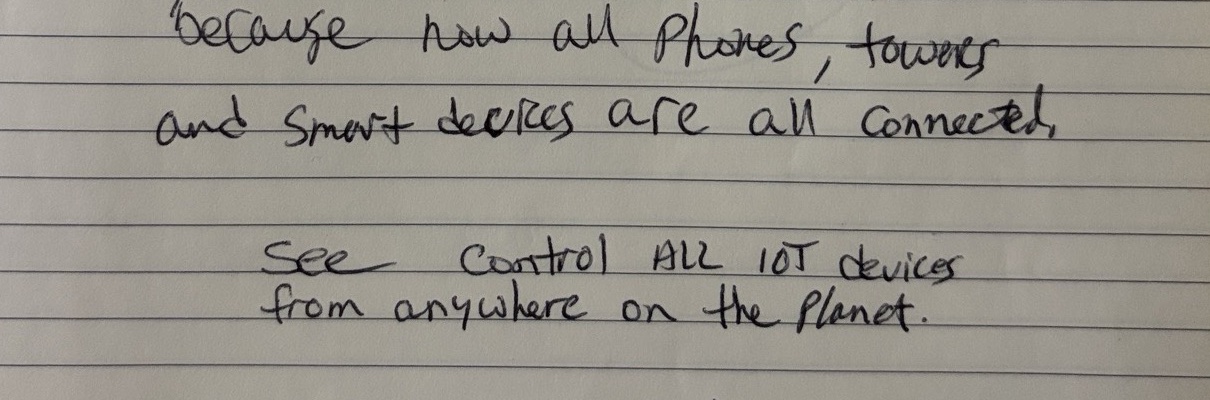
June 2021 · Amazon Sidewalk switches onThe shared mesh made of people's devices.
Echoes and Rings quietly bridge into one network built from the devices in people's homes — coverage nobody had to build towers for. My version had a name, a diagram, and a funding model.
2022
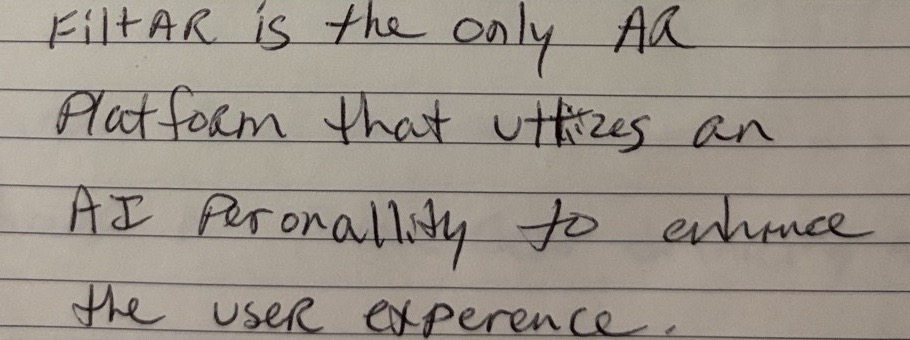
2022 · Companions become a categoryAI personalities go mainstream. Mine had a job.
Character.AI launches; companion apps explode into a category. My page is narrower and stranger: an AI personality inside an AR shopping platform — "the only AR platform that utilizes an AI personality." Not a companion for its own sake — a personality with a store to run.
2024
2019 → 2024 · Lens era to multimodal assistantsAI shops by what you're looking at.
Google Lens was already learning to shop as I wrote; by 2024, multimodal assistants suggest products in conversation. My page put that assistant where it belongs — inside persistent AR, offering "suggestions based on the object you are viewing."

2024
September 2024 · Bluetooth 6.0 — Channel SoundingCentimeter ranging, on the radio in every pocket.
Bluetooth 6.0 ships Channel Sounding — the ranging layer the whole plan was drawn around — and it starts displacing UWB in AR tracking. Every part on the 2018 list now exists.
2018
The honest ledgerWhat I got wrong.
The plan drew a mesh that measured position with radios that couldn't do it yet — angles took until 2019, distance until 2024. And I sized it like a carrier-scale 5G play, when the real unlock was the radios already in everyone's pocket. The architecture held; my sense of scale and timing didn't.
∞
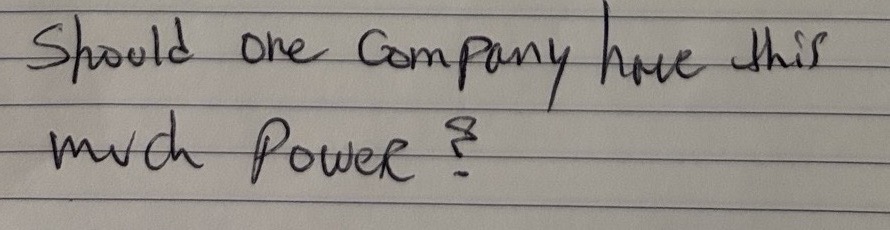
The page after the plan"Should one company have this much power?"
I asked it about my own design — looked at an AI connected to every device in every home, and saw the dystopia I could be building. The answer rebuilt what ALICE means: not control, companionship. Not surveillance, privacy in the bones. Not everything. Everyone.